Why POs Don’t Belong in a Mailbox
The ROI of Real-Time Orders

Date
Nov 27, 2025
Author
Priya Krishnamurthy
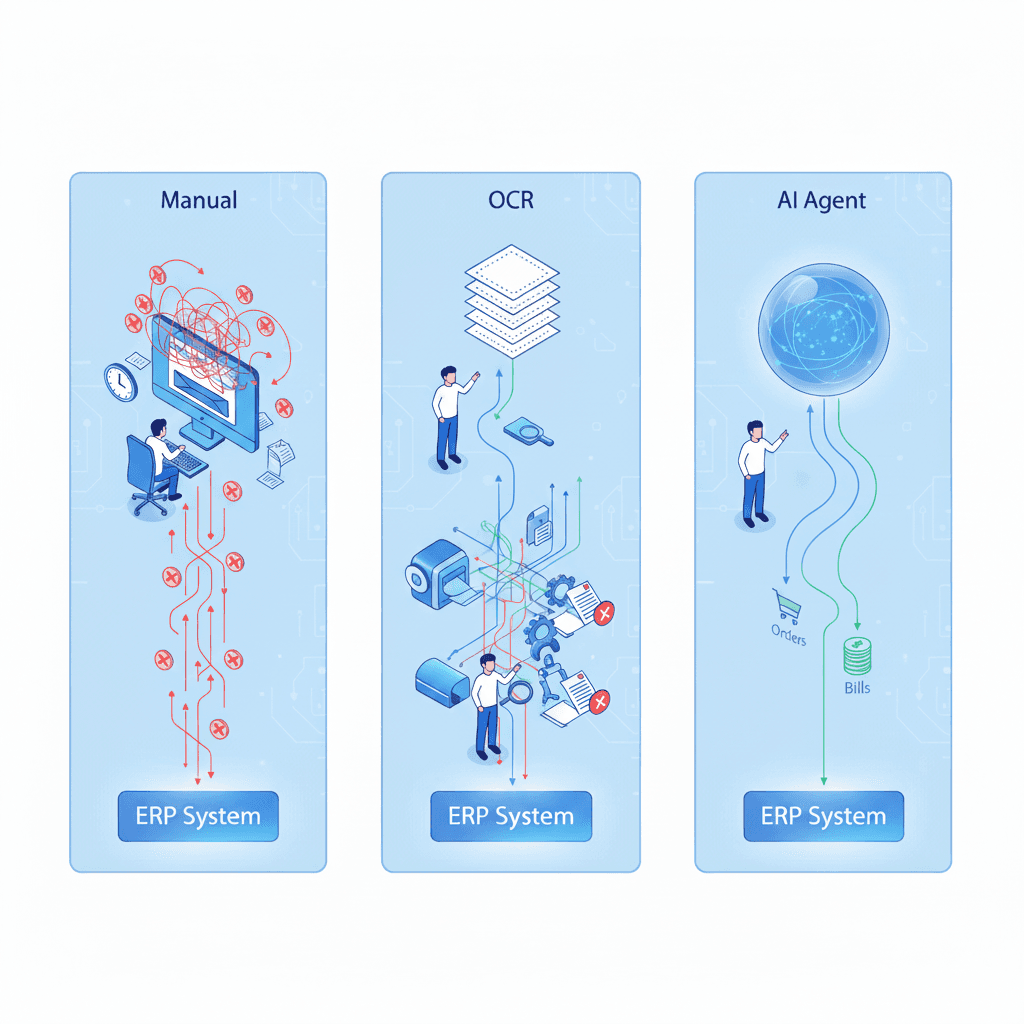
The velocity of modern commerce has reached unprecedented speeds, with businesses operating in a world of just-in-time inventory, real-time analytics, and next-day delivery. Yet, a striking contradiction persists at the heart of many wholesale distribution, retail, and manufacturing operations: the sales order process. For many companies, this critical, revenue-driving workflow remains anchored in the past, reliant on a digital "mailbox" where purchase orders (POs) arrive as attachments in unstructured formats. This is not a symbol of streamlined communication but a source of operational friction. The time and resources required to manually extract, validate, and enter data from these documents into a modern Enterprise Resource Planning (ERP) system create a bottleneck that slows down cash flow, erodes profitability, and stifles growth.
This report explores the hidden costs of this outdated paradigm and presents a compelling business case for a new, intelligent approach. By adopting an AI-powered sales order agent, businesses can transform the friction-filled mailbox into a real-time, self-learning extension of their ERP. The analysis contained herein will move beyond a simple feature list to demonstrate how this transformation yields a profound return on investment (ROI), not just in cost savings but in competitive advantage, employee empowerment, and sustained scalability.
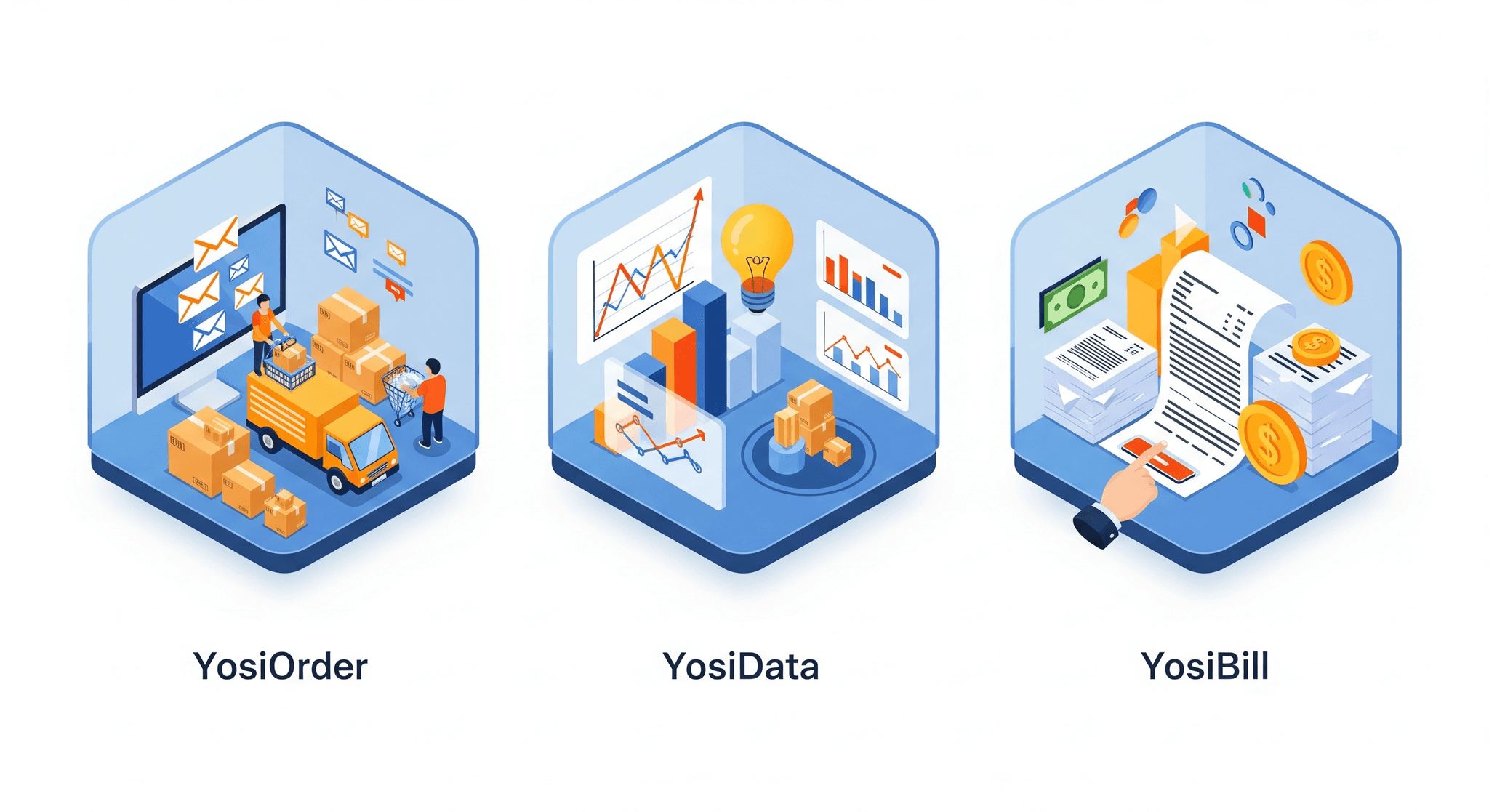
Learn how Yosiflow.ai AI Agent can transform your order process. YosiOrder Brief
1: The Hidden Cost of Manual Sales Order Processing
Manual sales order processing is a seemingly innocuous and long-accepted business practice, but it is a silent force that erodes profitability from multiple directions. The daily routine for a sales or operations team member often involves sifting through an inbox filled with customer emails, each containing a purchase order in a unique format, whether a PDF, a spreadsheet, or even an image of a handwritten note. This painstaking manual data entry is a critical vulnerability for the entire operation, where a single misplaced digit can trigger a cascade of negative financial consequences.
The Unseen Erosion of Profitability
The most direct cost is the high rate of human error. A benchmark for manual order entry is typically between 1% and 3%, but it can reach as high as 4%. This may appear to be a small percentage, but its impact is substantial. For a business that processes 10,000 transactions per month, a 4% error rate means approximately 400 transactions are likely to contain mistakes. Each error carries an average cost that can range from $200 to $250 per instance.
This financial exposure is a result of a multi-stage domino effect. A simple typo in an order, such as an incorrect SKU or quantity, is not just a data entry mistake; it is the first point of failure in the supply chain. This initial error leads directly to an incorrect shipment or invoice, which then triggers a costly sequence of rework. The total cost is not limited to the immediate expense of a refund or re-shipment; it also includes:
The administrative overhead of resolving the issue.
The potential for lost revenue from damaged customer relationships.
The risk of chargebacks or penalties from trading partners.
The true cost includes diminished customer trust and a lowered profit margin, consequences that are far more difficult to quantify but just as damaging.
The Tyranny of the Inbox
Beyond the financial costs of errors, the manual order processing workflow imposes a significant toll on the human capital of a business. The mailbox serves as a digital chore list, demanding that skilled and valuable employees spend a significant portion of their workday on mundane, repetitive, and low-value administrative tasks. To put a quantifiable figure on this phenomenon, consider an Order Operations Manager earning an annual salary of $75,000. If this individual spends just 3 hours per day on manual data updates, that time alone represents an annual labour cost of over $28,000.
The strategic cost of this tedium is two fold:
High Risk of Employee Turnover: The tedious nature of manual data entry makes it difficult to retain talented employees, leading to burnout and turnover. The cost to recruit and train a new employee can be substantial, with a replacement for a $60,000-per-year employee costing as much as $30,000 to $45,000.
Substantial Opportunity Cost: When skilled team members are engaged in tasks that are easily automated, they are not engaged in high-impact, revenue-generating activities. This includes opportunities for upselling, proactively improving customer satisfaction, or developing strategic initiatives to optimize the supply chain. The company is, in effect, paying for the absence of strategic thinking.
Data Silos and Stifled Growth
The final consequence of manual order processing is the creation of data silos and the subsequent inability to scale. As documents are processed, the critical information they contain remains fragmented and inconsistent. This data is scattered across multiple systems, emails, spreadsheets, and paper records, making it nearly impossible to gain a unified, real-time view of the business. This lack of real-time data is not merely an inconvenience; it is a fundamental strategic liability that leads to misguided decisions, inaccurate demand forecasting, and dissatisfied customers.
2: The Business Case for AI & ERP Automation
The business case for automation begins by quantifying the transformation from a reactive, bottleneck-ridden operation to a proactive, streamlined one. Automation is not merely a cost-cutting measure but a strategic investment in speed, accuracy, and efficiency.
From Tedium to Transformation: The Metrics that Matter
The shift from manual to automated processes yields immediate and measurable gains across key operational metrics.
Dramatic Reduction in Processing Time: AI-powered automation can cut processing time by as much as 90%, freeing teams from repetitive data entry. A tangible example is a regional retail chain that reduced its order entry time from 7 minutes to 2 minutes, a 66% improvement that directly accelerated its fulfilment cycle.
Reduction in Error Rates: By eliminating manual data entry, automation drastically decreases errors. While the manual benchmark error rate is between 3% and 5%, best-in-class companies leveraging automation have reported error rates below 1%. This improvement directly translates to fewer returns, credits, and customer complaints, reducing the hidden costs associated with rework.
Compression of Order-to-ERP Cycle Time: This metric, which measures the time from order receipt to its submission to the ERP system, is a direct indicator of throughput gains. The implementation of automation can cut cycle times by 50% to 80% within the first 90 days, enabling businesses to fulfil orders faster and put money in the bank sooner.
The following table provides a clear comparison of these metrics:
Metric | Manual Processing | Automated Processing |
Average Processing Time Per Order | 10-30 minutes | 1-2 minutes |
Average Error Rate | 5-12% | <1% |
Cycle Time Reduction | N/A | 50-80% |
First Pass Yield | Varies, high exceptions | High, with configurable thresholds |
The True ROI: Beyond the Keyboard Clicks
The true return on investment for automation extends far beyond simple cost savings. The most significant ROI dividend comes from its strategic impact on the business.
Lower Cost-to-Serve: As the number of manual touches per order decreases, so does the cost per order. By reducing the labour, resources, and rework required for each transaction, a business can significantly lower its overall cost to serve, freeing up capital to be reinvested in growth.
Higher Customer Satisfaction: In a market where customer expectations for speed and accuracy are constantly rising, delays or errors are a significant liability. Conversely, fast, accurate, and error-free delivery builds customer trust and loyalty, securing long-term relationships and encouraging repeat business.
This synergy of operational and customer-facing improvements creates a powerful growth engine. When a business can process orders faster and with higher accuracy, it leads to a better customer experience. Simultaneously, by freeing employees from mundane tasks, the business can reallocate its most valuable asset—its human capital—to high-impact strategic functions. This is the strategic ROI dividend that separates an efficient company from a market leader.
YosiFlow Order Agent: YosiOrder for ERP - A Blueprint for Transformation
The evidence is clear: The practice of processing sales orders from a mailbox is no longer a viable option for businesses aiming for efficiency, profitability, and scalability. It is a source of friction that creates a silent tax on the business in the form of high error rates, costly rework, and low employee morale. The hidden costs of this outdated approach are not limited to time and money; they manifest as a fundamental strategic liability that stifles growth and undermines a business's competitive edge.
The analysis presented in this report provides a compelling blueprint for transformation. By adopting a purpose-built AI sales order agent like YosiOrder, organizations can move from a reactive, manual, and error-prone process to a proactive, intelligent, and real-time operation. This transformation delivers a quantifiable return on investment through dramatic reductions in cycle time, error rates, and cost-to-serve.
More importantly, it creates a strategic dividend that positions a business for future growth. Automation empowers the workforce, reallocating human talent from tedious administrative tasks to high-impact, revenue-generating activities. It enables a business to manage complex, multi-location customer relationships with a level of accuracy and speed that was previously unattainable. The days of purchase orders languishing in a mailbox, creating friction and slowing down cash flow, are over. The future of commerce is here, and it is a real-time, intelligent system that empowers your team to stay in flow and focus on the work that truly drives revenue and growth.
Ready to transform your order process and boost your ERP's ROI?